
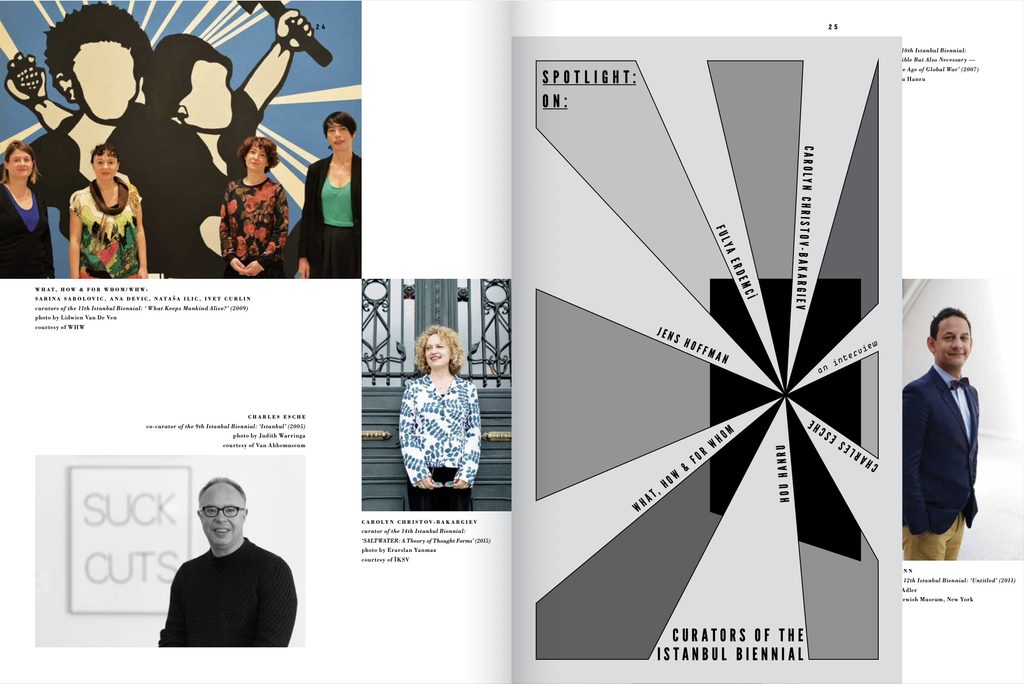
Originally published in exhibist Print Issue 7 (September 2015).
An interview series with curators of the Istanbul Biennial: Carolyn Christov-Bakargiev, Fulya Erdemci, Jens Hoffmann, What, How & for Whom (WHW), Hou Hanru, and Charles Esche.
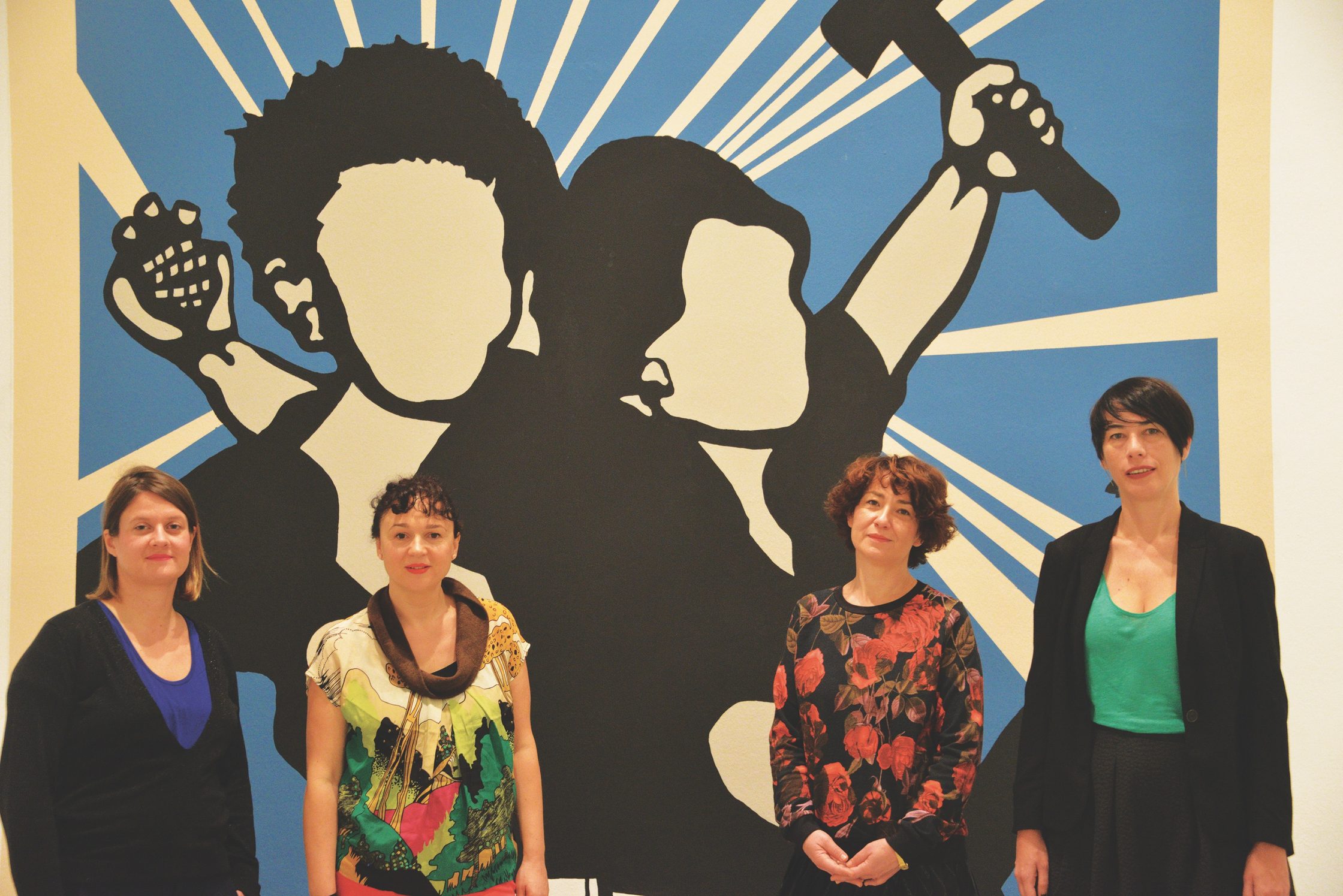
WHAT, HOW & FOR WHOM (WHW)
Curators of the 11th Istanbul Biennial: What Keeps Mankind Alive? (2009)
What Keeps Mankind Alive? initiated critical thinking by showcasing explicitly political art. Could you elaborate on your curatorial concept?
With What Keeps Mankind Alive? in 2009, we addressed capitalist ideology by discussing the redistribution of ownership within bourgeois society. This was in line with German playwright Bertolt Brecht’s intentions in The Three-Penny Opera (1928), from which we took our title. We aimed to expose parallels between the burgeoning liberal economy’s capacity to erode social consensus in 1928 and in the present, as a warning that – like in the 1930s – a consequence of the economic crisis is a massive rightward shift of the European electoral body.
How was it received by the media and public in Turkey and abroad?
The reception of these messages was rather mixed. There was a lot of discontent with our leftist rhetoric delivered in the context of biennial sponsorships. There were demonstrations at our opening, initiated by Resististanbul. In the end, these protests merged with the opening crowd and slipped into the performative framework of the opening ceremony. These protests represent broader tensions between political activism and the claims of contemporary art as a means of political intervention. The intensity of these debates proved that these questions are always in negotiation, and that the answers are always strategic and temporary.
Do you feel there is a lack of politicism in the Istanbul Biennials?
It is important that biennials address issues which are not only local in context but also prone to repression and/or censorship. Political and overall engagement differ from one curator to another – Mom, Am I Barbarian?, curated by Fulya Erdemci, directly addressed the notion of the public domain and attempted to relate various spatio-political struggles, whereas Untitled, curated by Adriano Pedrosa and Jens Hoffmann, explored minimalist and conceptual ideas seeking the political potential embedded in artistic production.
Have you been especially drawn to any particular Istanbul Biennial?
The 4th edition – Orientation (Vision of Art in a Paradoxical World), curated by René Block in 1995 – marked a new beginning for the Biennial with collaborations in many cities including Diyarbakır, and by being the first Biennial that used the Antrepo space (now Istanbul Modern). Another important turning point was the 9th edition, curated by Charles Esche and Vasıf Kortun in 2005, which proved that the Biennial could be engaged, critical and enjoyable. Titled simply Istanbul, it explored the impact of globalisation and urban development in the city, abandoning venues in the historical peninsula and moving them to urban centres like Galata and Beyoğlu. The Biennial should continue meaningful experimentation while supporting both challenging artistic proposals and curatorial integrity.
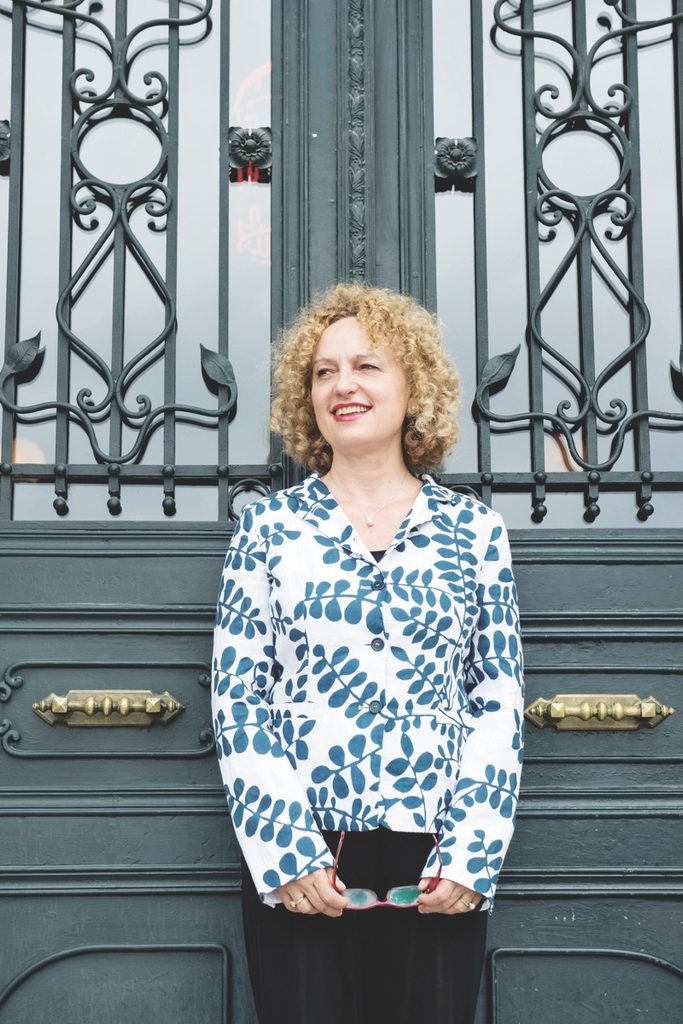
CAROLYN CHRISTOV-BAKARGIEV
Curator of the 14th Istanbul Biennial: SALTWATER: A Theory of Thought Forms (2015)
Could you tell us about your connection to Turkey and how your collaboration with the Istanbul Biennial started?
My relationship with Turkey goes back a long way. I have always admired the Istanbul Biennial because it participated in the process of decentralising art from the main capitals and major periodic exhibitions, such as the Venice Biennale or the Carnegie International. Of course, there has been São Paulo since 1951, and Sydney since 1973. Still, I think Istanbul spearheaded a critique of Eurocentrism and took the lead in the contemporary movement of the decentralisation of art; bringing to the forefront many artists from Turkey, who, at that time, were not known; and later, artists from other regions of the world as well.
My collaboration with Turkey began in earnest when I was asked to be on the advisory board of the Istanbul Biennial, in 2010. I was on the board for four years, until 2013. It was the time of Jens Hoffmann, Adriano Pedrosa and Fulya Erdemci. During that time I learned a lot about the inner workings of the biennial regarding the incredible energies and the very real wish to consider art and its relationship to society very carefully and also with great respect, interest and openness.
In 2008 you curated the 16th Sydney Biennial, then in 2012, dOCUMENTA (13). After that you withdrew from the art world and focused on teaching and research. How did this time affect your approach to drafting the upcoming Istanbul Biennial?
The years after dOCUMENTA (13), from the end of 2012 well into 2014, were years in which I focused not only on teaching, but also on seminars. For example, I received the Leverhulme Professorship and I worked closely with Griselda Pollock at the University of Leeds. I was also Pernod Ricard Visiting Professor in the philosophy of art and naturecultures at the Goethe University in Frankfurt, in the Philosophy Department and collaborated with Christoph Menke. Additionally, I taught at Cooper Union in New York and also Northwestern University in Chicago, in their Art Theory and Practice Department. I did other seminars and workshops as well, including one at Harvard University last spring. These years were serving the purpose of testing some of the concepts that I had expressed in dOCUMENTA (13).
These experiences have had a very clear effect on my approach to the upcoming Istanbul Biennial. In 2015, I was Visiting Scholar at the Getty Center. There you can focus exclusively on doing research with their extensive archives. I was researching Harald Szeemann’s documents there. What occurs to me now for the first time, so thank you for the question – is that you are mostly in small groups or alone when you are doing research of that type, and I gave a lot of value and importance to this sense of being alone, withdrawn and going into depth. One of the diseases of our digital age is Attention Deficit Disorder, and also autism. The contradictions of autism are, on the one hand, withdrawal and on the other hand, this excessive being in the crowd. The one to one and small group interaction is a very difficult relationship. I think that these experiences have brought to my attention how it might be possible to organize an exhibition which seems to be a contradiction: if you look at the venues, there are only four that have group exhibitions: ARTER, the Galata Greek Primary School, the Italian High School and mainly the Istanbul Modern. The rest are a series of solo presentations in a building, a boat, a hotel and so forth. They are far from one another and so create a kind of isolation around themselves.
It is not a reactionary position; it is a very politically radical one because it is true that the public space has been privatized. One loses the squares and the piazze; Taksim Square gets crushed by the police, so you can see this loss of the public space. At the same time, the public space can be reborn in the digital age, in terms of these remote locations. There is a lot of agency in the communication within the world, from these remote locations. Suffice it to say: Edward Snowden. Snowden created a world turmoil and a political and diplomatic crisis from a hotel room in Hong Kong. I believe that if Hannah Arendt were alive today, she would probably be discussing this incredible agora, or public space, which exists today via these temporary spaces of habitation on land and on sea. One can actually find forms of agency in these temporary spaces of habitation. This approach was affected by my experience of being quite remote at the Getty, but at the same time I got very close to Mark Wigley, Beatriz Colomina and Tacita Dean, who were there with me. I think that there is the potential for a lot of depth and freedom in making those connections meaningful.
What was your inspiration for the Biennial’s curatorial concept?
I am a simple person – if I am on salt water, like the Bosphorus, I think about what it means to be on salt water. I always root and radicate. I radicate, not eradicate. I root my projects within their locations. The Istanbul Biennial has never really focused on the salt water that it is on. The very physical oceanographic and the actual chemical presence of salt and salt water is what inspired me. To think of the Bosphorus not just as an abstract line on a map that divides Europe from Asia, but as a connector, as a water channel between the Black Sea and the Marmara Sea and therefore the Mediterranean Sea. This is another kind of relation, which invokes Levantine and Mediterranean history, from antiquity through the crusades, to the fall of Constantinople to today. On the other hand, the questions of Ukraine, Crimea and Russia and pipelines and oil.
There are many different ways in which you can look at the Bosphorus. As a channel of water, the Bosphorus made me think about what is underwater, of underwater rivers. It is actually one of the key locations to study the behaviour of underwater channels. Things which occur underwater seem simple, but they are not. Salt water is made of different densities of salinity. For example, the Black Sea is sweeter than the Mediterranean, because the Bosphorus only opened up in about 6500 BC, linking the different salinities between the two bodies of water and creating different currents. This action below the surface relates to today in terms of the various devices in our digital society – the flat surfaces of our iPods, iPads, smartphones… The code below the surface is not visible, it is a hidden expression of power, embedded for reasons of profit and so on, and that is my inspiration.
I come from Arte Povera so am very interested in the entanglements and connections between the so-called urban and non-urban or rural, what people call ‘nature’. I don’t like calling it ‘nature’ because I don’t think there is a difference between nature and culture; they are interwoven.
Could you talk about how you developed this year’s Istanbul Biennial?
This biennial will be spread out along the Bosphorus. I always show spaces to artists, and that process is driven by my intuition, finding the spaces that have a history, that are connected to the exhibition.
Sometimes, I show a venue to an artist and they do not like it, sometimes they think it is perfect. For example, the old Trotsky House on Büyükada, I showed it to Adrián Villar Rojas and I knew that it was the right place for him, indeed, he loved it. I showed another building to Ed Atkins on Büyükada that looks sort of like a haunted house and I thought it was perfect for Ed, even though he had never exhibited outside of a white cube. His work is so much about the sort of digital subject that emerges from the laptop with a very melancholic voice, almost like a ghost. For this reason, I thought this was an image that he would be intrigued by, and he was. That is how I proceed.
Science seems to be a big part of your work; can you explain how your interest in the combination of art and science started and why it is important to you?
It is not about science in general, it is which science, and it is not about art in general. I am not inviting Damien Hirst to the biennial, I am not inviting a geneticist who works for Monsanto either. I think that there are different politics in science and different politics in art. It is not fair to say, ‘Oh, she’s the one who is interested in science and art.’ It is not that simple. It is a trajectory of many different connections that cross transversally through all the fields – philosophy, literature, film, science and so on.
In a previous interview, you mentioned a painting by Brazilian artist Cildo Meireles being a central piece in your Istanbul exhibition project. Can you talk to us about this painting?
Oh yes, Project Hole to Throw Corrupt Politicians In, that is a very important painting. It is actually two paintings juxtaposed vertically with the space in between them creating the space of this gap. Does this hole exist? Can we make this hole? Of course, it is also a reference to the politics in Turkey, but not only in Turkey, there are corrupt politicians all over the world. That painting has so much to do with the dialectics between art and society and also has to do with ‘thought forms’, which are very important to me. ‘Thought forms’ are abstract and usually invisible, but they have the potential to become visible. These forms can manifest in certain moments of intense meditation, for instance. For example, air and wind – one becomes heightened and, as such, more visible. I was thinking a lot about Theosophy and Annie Besant’s book about ‘thought forms’ and the visibility of the invisible as a subject that was very interesting. Think of the invention of X-ray with Röntgen and the radio. Obviously, radio signals are invisible waves that, if you are able to visualize them, can become visible. Often, ‘thought forms’ are abstract and often abstraction has developed in contexts where there is political repression and authoritarian regimes, as we know from looking at the history of Latin American Art and also other places. It has to do with the artist doing things that appear coded, but they are not really coded, they are very visible.
Would you say there is a development visible in your work since the 16th Sydney Biennial? Do you feel your experiences with such large-scale art events have influenced your work?
They have not influenced my work, they are my work – my work and my life experiences. I do not really see the differences between life and work. The forms of life and the forms of art should coincide somehow. I believe that the exhibition is not really separate from life. Somehow making them coincide as much as possible is so meaningful.
How do you think the controversy that surrounded the previous Istanbul Biennial has had an effect on your work in curating the upcoming edition?
When I spoke about withdrawal from the crowd and the political agency in it, one could consider Edward Snowden. For instance, Snowden is post-Gezi. Look at Egypt, it is worse than before, they threw everybody in jail and cut down the revolution. Look at what is happening in Greece, it is horrendous that the European Union bailout is basically bailing out the banks. And yet, they are repressing and putting the burden on the individual Greek people in ways that make no sense to me. Ultimately, half of the money that they give in bail-outs goes back to the same creditor banks that were lending to other banks and also teaching them to be corrupt, and hide their debt. From a political perspective it is time to really be aware of how to use the enfolded encoding. To quote myself from the press conference of the 14th Istanbul Biennial: ‘before the enfolded encoding enfolds.’ I mean there are ways of acting and having agency and power that have a lot to do with it.
There is a lot of criticism in Turkey, but also worldwide, of the biennial as a force of gentrification. The biennial is being accused of being a vehicle for the city’s self-promotion – a quick fix to generate marketable uniqueness through cultural capital to attract tourists’ money and foreign investment. What is your opinion on this topic and how do you position yourself in this discourse?
You know that question is an interesting one. Biennials, in general, tend to use spaces that curators choose. Often these are old buildings or old warehouses, and therefore their utilization indirectly contributes to gentrification in that area. I think that has been true all over the world where biennials have occurred, including Venice. If you look at the Arsenale, it has caused the gentrification of a certain area of Venice, where there was a very local population living and that’s terrible. It happened in Sydney and it happened in Istanbul with the use of Antrepo, part of which is now the site of Istanbul Modern and the whole area is now being developed into a consumer centre. It is true of all artistic lives, artists tend to find their studios and their homes where the rents are low, like in Williamsburg or Queens, across from Manhattan, and then the real estate developers come in and build condominiums there. One negative consequence of contemporary art and biennials is gentrification.
At the same time, no matter whom you marry, after 30 years it is a catastrophe but it’s also wonderful and fantastic. So, we have to think in terms of the flourishing of life and nurturing potentialities. What the arts, science and philosophy can bring is so extraordinary. Consider the fact that physics introduced the atomic bomb. To try and understand what the world is made of, and how particles work, that is such an incredible adventure. Through that exploration we arrived at the idea of photon entanglement and the idea that time and space are not separate, that they are somehow interconnected. In this way, physics is liberating, even though it brought us the atomic bomb. I often think about something that Donna Haraway said to me once: ‘What stories do we want to tell so that other stories can be told?’ Telling a certain story closes off another story. In telling a story that is not strictly about the negative outcomes of things, one holds a ‘communicaring’ position, to use a word from Bracha Ettinger, not a just communicating position. If you hold together the trauma and the flourishing, then the stories never end. In this way, storytelling can really change history. We live in an era of creative capitalism, and knowledge capitalism. Products of philosophy, art, mathematics and physics, they all fold into this system of the exploitation of humans, based on the exploitation and control of knowledge. And then, do we commit suicide like Walter Benjamin? Or do we live? Do we write, like Adorno did, ‘There is no lyric poetry after Auschwitz.’ There is an inherent paradox in writing that because, ‘there is no lyric poetry after Auschwitz,’ is one of the most beautiful lyric poems of the 20th century.
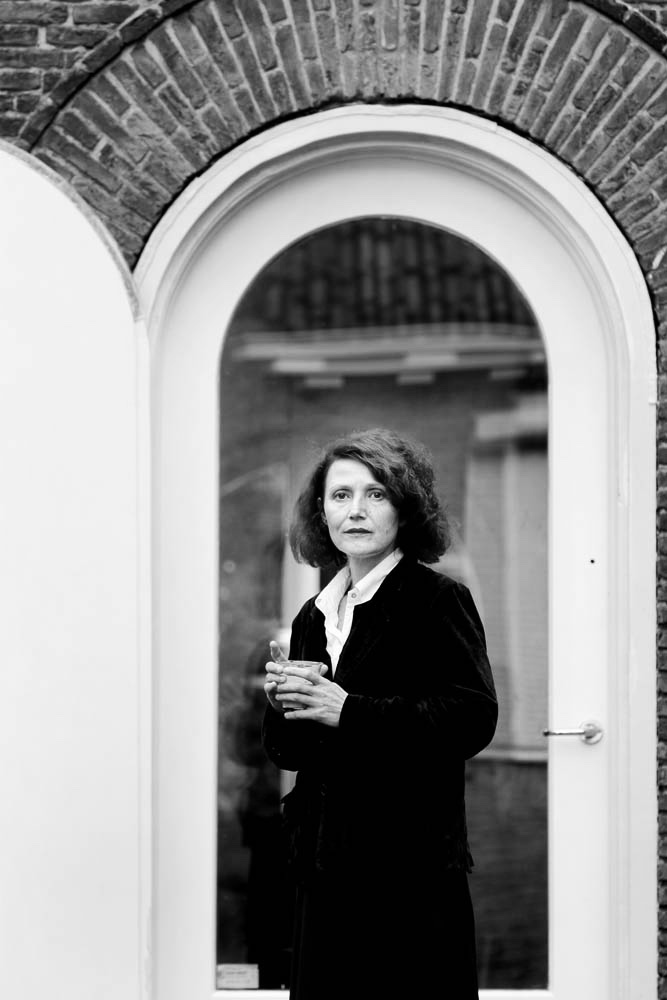
FULYA ERDEMCİ
Curator of the 13th Istanbul Biennial: Mom, Am I Barbarian? (2013)
In May 2013 only a few months before the start of the biennial the Gezi protests began in Istanbul, which made you rethink your entire curatorial strategy. Can you elaborate on that and what message you tried to convey in response to these events?
The 13th Istanbul Biennial coincided with the Gezi Resistance, a striking civic awakening, which was initiated in Istanbul. The biennial centered on themes related to the public domain and the city’s function as the spatial component of the democratic apparatus – issues that were also at the root of the collective resistance triggered by imminent plans to transform Gezi Park in Taksim Square into a shopping mall.
The Gezi Resistance and ensuing public protests exposed the local authorities’ lack of responsiveness and willingness to engage in dialogue. For this reason, we began to question what it means to realise art projects in urban public spaces with the permission of the same authorities who were curtailing their own citizens’ freedom of expression and movement. The conceptual framework we put forward was that the raison d’être of any art project in the public domain is to open up discourse and make the debate visible. However, the Gezi Resistance had already manifested the conflict in the public space. For us, to collaborate with the authorities in these circumstances would be affording them the opportunity to regain their lost prestige and legitimacy after Gezi. This would have led to the instrumentalization of art in favour of the authorities. In order to avoid collaboration with these very same authorities, we decided to withdraw from public spaces and to continue the discussion inside exhibition venues. In this way, we marked our presence through absence.
We made our decision not to collaborate with the city authorities public. Our decision was followed by many practical and conceptual complications. We needed to renegotiate the projects in a very short amount of time, which was only possible thanks to the tireless efforts of the entire extended biennial team. Of twenty projects and performances that were planned for public spaces, only seven projects were lost.
In an effort to make the exhibitions more accessible, we made entrance free of charge. To accomplish this, we cut expenses by shortening the exhibition to five weeks and canceling opening parties. Conceptually, we radically revised the programme to shift the focus from theory to practice-based events. In the five-week period of the exhibition more than 40 events were realised. Although the biennial withdrew from public spaces and was not promoted on billboards in the city, there was intense public interest with 337,429 visits in just five weeks.
The reaction toward the exhibition was quite mixed. Some criticized it for not having taken place in public spaces, which they saw as a sign of giving up a missed opportunity. Others criticized us for not reflecting Gezi more directly. Still, for others, the exhibition articulated, and complemented the questions posed by Gezi, fully deploying the power of art without appropriating the resistance movement. It certainly opened up a long-awaited debate.
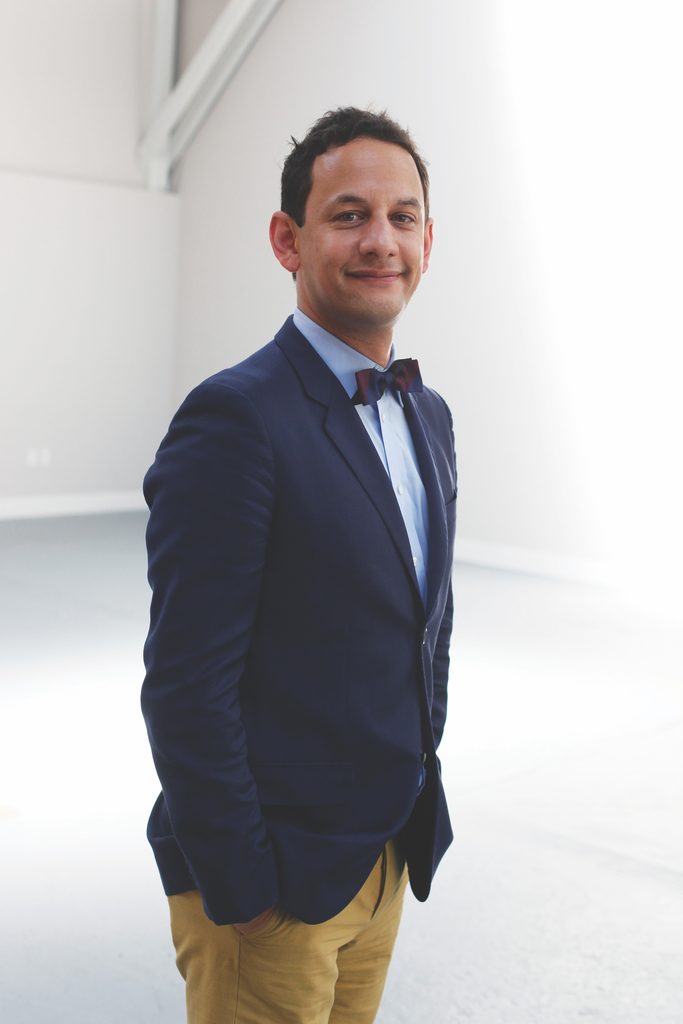
JENS HOFFMANN
Co-Curator of the 12th Istanbul Biennial: Untitled (2011)
The point of departure of your curatorial concept for the 12th Istanbul Biennial in 2011 was work by Cuban American artist Felix Gonzalez-Torres (1957–1996). You mention that you chose to name the biennial Untitled because meaning is always changing within time and space, again referring to Gonzalez-Torres, who genuinely wanted to make this world a better place and believed that his art could be a catalyst for change. This curatorial concept was very different from previous ones in that it did not feature any side-events and did not directly engage with the city. Can you tell us more about how you and Adriano Pedrosa decided to take this approach?
Exhibitions are always in conversation with each other. Each proposes a different strategy of communication between the work and the public. We studied the previous Istanbul Biennials very carefully and felt that we did not want to have many venues all over the city. Instead we created one concise exhibition, which had to be experienced as one continuous statement, rather than a series of fragments. While both Adriano and I had spent significant time in Istanbul before we were appointed, we did not feel equipped, in regards to our knowledge of social and political realities and history of Istanbul, to make specific statements about the state of Turkey in 2011. The Biennial in 2005 had done this very well, and so did the one in 2007, and to some extent, the 2009 edition. After that outwardly political Biennial in 2009 we were interested in looking at artwork that was both politically progressive and formally innovative. We aimed to engage with themes that would not only resonate in Istanbul, and Turkey, but that were also universally relevant, as well.
A lot of the reactions saw our exhibition as the center of a newly emerging art scene in a region in which museums and galleries were opening and presenting strong programs all around the city.
Did you have a biennial that you liked in particular?
I think that the one in 2005 made the biggest shift. It moved away from the venues in Sultanahmet to less touristy areas of the city, presenting art in spaces such as apartments, old office buildings or former shops, really trying to relate and integrate with Istanbul and its varied realities.
Is there anything you would like to see for the biennials to come? Or any development that you expect to happen in the future?
I hope that the Istanbul Biennial will continue to invite strong and innovative curators and that they are given the support to continue to organize the type of diverse and meaningful exhibitions we have seen in the past.
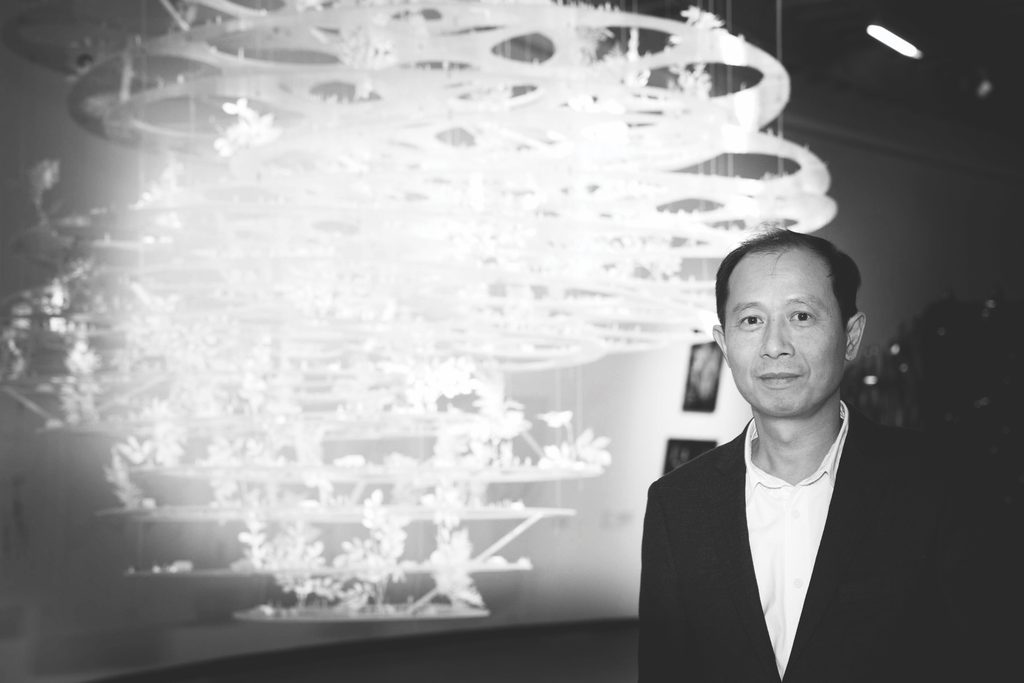
Preview della mostra “Non basta ricordare” collezione Maxxi
�Musacchio & Ianniello
*******************************************************
NB la presente foto puo’ essere utilizzata esclusivamente per l’avvenimento in oggetto o per pubblicazioni riguardanti la Fondazione Maxxi
*******************************************************
HOU HANRU
Curator of the 10th Istanbul Biennial: Not Only Possible But Also Necessary: Optimism in the Age of Global War (2007)
What differentiates the Istanbul Biennial from other biennials you’ve curated so far?
The Istanbul Biennial is one of the most interesting biennials, particularly because it was one of the first major international biennials happening outside of the traditional Western system. The biennale really managed to put Istanbul at the forefront of the global scene with its very particular way of engaging with the city. It provided a new context for exhibitions which were closely integrated with the urban environment, and intricately engaged with the socio-political life of the city. It is important to invent new ways of presenting an exhibition and the relationship between art and society.
A biennial is a laboratory of social change, it is a mobilisation of the art and cultural community, which has a strong impact on society. My edition in 2007 dealt with the question of urban transformation. For instance, the sites I chose, like the AKM, the textile market and so on, are truly the battlefields of today in light of Gezi and other recent conflicts.
An exhibition is not only a presentation of some nice, or even great, artworks, it is an opportunity to provide a larger platform for public debate on the present and the future of the society. In that regard, an exhibition is an ongoing social event, not simply a display of objects. One should not follow only one model or definition of modernity. One has to be open to the possibility of multiple modernities, which in turn generates several ideas of what we define as a social good. And further, what we define as the representation of this social good.
2009 is considered the peak of the Turkish art scene by many. Why do you think that is?
It is a global tendency that contemporary art is very influenced by the market today. There is a kind of a normalisation of the art system where more museums and galleries are founded, creating more possibilities for artists to sell their work. This happens everywhere. However, the Istanbul art community remains very much aware of this situation and they remain involved in a political and social way.
Is there anything you would like to see more of in the future?
It’s typical to say, but I would like to be surprised. Time has passed and I am curious to see how the upcoming biennial will reflect recent changes in Turkish society. For better or worse, there are different aspects to address now, including the Gezi movement and the recent elections. During the last years, the art community has certainly become more globalised as the influence of the market has gotten much stronger. I see it as a new challenge for the artists, I am very curious to see what they do.
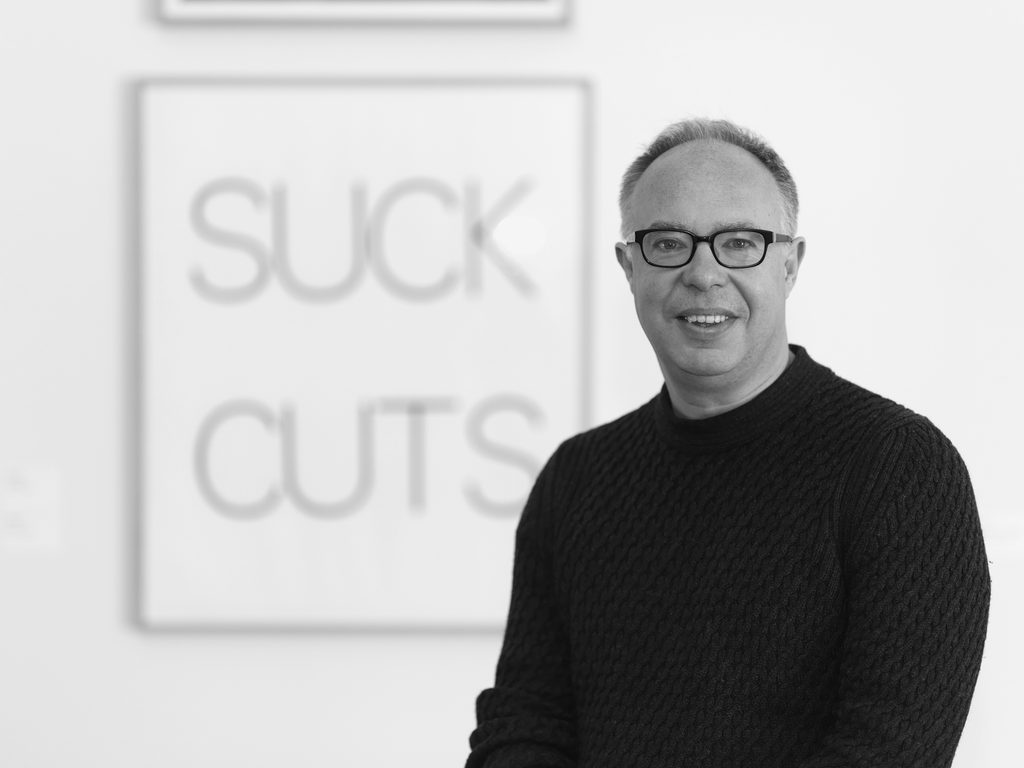
CHARLES ESCHE
Co-Curator of the 9th Istanbul Biennial: Istanbul (2005)
The Istanbul Biennial you co-curated in 2005 with Vasıf Kortun is regarded as seminal in the biennial’s history. Your program included major structural changes like moving away from historic sites and putting the biennial right at the heart of the urban flux, as well as distancing yourself from representational takes on the city. How did you and Vasıf develop the curatorial concept?
The simple answer to your question is that we did what we thought was obvious and necessary. After what I thought was the ultra-exoticising and quite exploitative biennale of 2003, it was clear that the biennale needed a new direction. The biennale needed to strengthen the cultural scene in the city, not only take from it. Istanbul was becoming the biggest city in Europe, an economic hub for global capital, and at that point its ‘orientalism’ was beside the point. To talk about the contemporary city and contemporary art’s relation to politics, power and society, you need to start in the places where it is most visible. At the same time, we always wanted to balance Istanbul with ‘not-Istanbul’, in which one views the city through its parallels and differences with other places. That was why perhaps 40% of the works came from other cities.
There is a lot of criticism in Turkey but also worldwide of the format of the biennial as a force of transnational gentrification and a vehicle for the city’s self-promotion – a quick fix to generate marketable uniqueness through cultural capital to attract tourists’ money and foreign investment. Was the Istanbul Biennial you co-curated trying to make a statement in relation to the questions raised in this context and if so how?
The 9th biennial was the last one without major commercial sponsorship, so we were not confronted with the protests of later years, however city marketing and gentrification were certainly an issue. The move to Beyoğlu was an effort to exhibit in a non-touristic part of the city. Many works touched on the gentrification concerns. The exhibition was about the potential of Istanbul as a place from which to look at the world, rather than a critique of its development. It was a positive story which aimed to avoid the lazy, leftist, armchair critique.
Turkey has changed exponentially since the first Istanbul Biennial almost 30 years ago in 1987, but it is still a fractured country marked by vested interests, religious and ethnic conflicts not to mention the effects of global economics. Have you noticed any residual developments or changes in the Istanbul Biennial, comparing editions before and after you curated it in 2005?
What’s interesting to me is that, at the start, the comparison of the Istanbul Biennial was always with Venice, as in ‘Istanbul – Venice: the historical link remade’. In this narrative, Istanbul was ‘catching up’ to a European city and promoting its glorious, imperial past in an old, decadent city.
Now, 25 years later, no one in Istanbul would be interested in a comparison with Venice – or if they were, it would be quite perverse. I think that change says a lot about how the world has shifted since 1987.
After 2005, I think there was a kind of running conversation between the next two biennials by Hou Hanru and WHW. In retrospect, they can, in some ways, be read as a triptych, exploring different aspects of similar issues. I was closely involved in both, in different ways, and appreciate both biennials a lot. Then, in early 2010, Şakir Eczacıbaşı, the Chairman of the Board of Directors of İKSV, died and the new regime wanted a return to market art and elite pleasure. This made me lose my enthusiasm for the biennial. I refused to see the 2011 edition, which was devoid of positive energy and a sense of relevance. In 2013, Fulya put the biennial back on the rails as a socially engaged project that was not only for the elite. She had a tough job, Gezi Park uprising notwithstanding. Now, we wait to see which way it goes.
Is there anything you would like to see for the biennials to come? Or any development that you expect to happen in the future?
I would like to see contemporary art activities move out of Istanbul and to the country’s periphery. The Çanakkale Biennial is a good example, and I wish it well. There is a need for more institutional development in the south-east and on the Aegean coast, and maybe some hidden, high-level academies in the Anatolian plains. Also to connect back to the Balkans – to Albania, Kosovo, Bosnia – would be a great step to see. Thinking about the wider region by working in it, rather than observing it from Istanbul, could lead to some worthwhile new perspectives.